Broker training courses separate professionals who stumble through their careers from those who build real expertise. At Unbroker, we’ve seen firsthand how structured education transforms brokers into confident deal-makers who understand market dynamics, compliance rules, and client psychology.
The right training program gives you practical skills you can use immediately, not theoretical knowledge that sits on a shelf. This guide walks through what modern broker education covers and why it matters for your long-term success.
What Broker Training Actually Teaches You
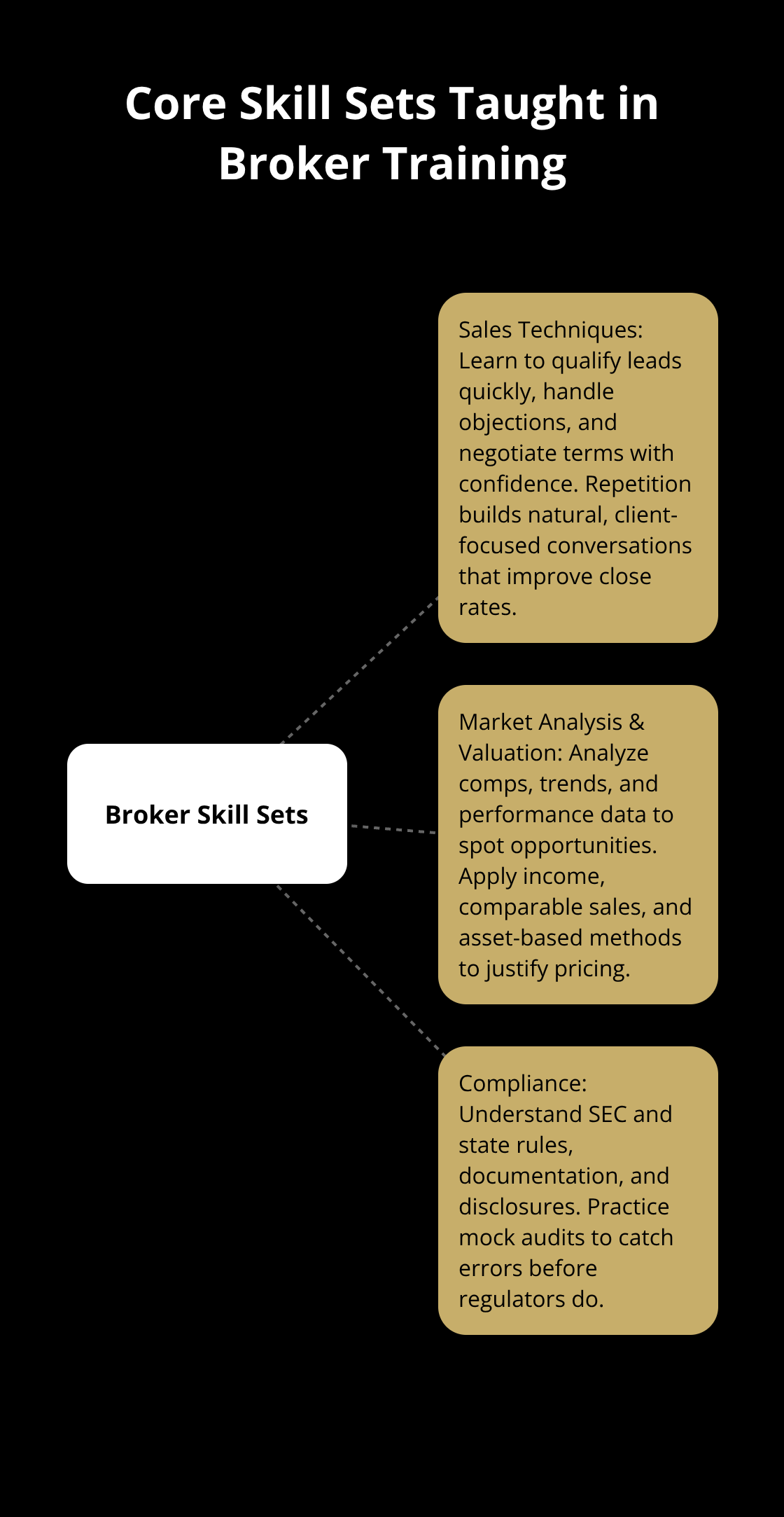
Broker training courses focus on three skill sets that directly impact your ability to close deals and build client relationships. Sales techniques in modern broker education go far beyond cold calling scripts. You learn how to identify decision-makers, understand their pain points, and position yourself as a problem-solver rather than a salesperson. Training programs teach you to qualify leads quickly, which saves time and increases your close rate. You practice these scenarios repeatedly through role-playing exercises where you handle objections, negotiate terms, and manage difficult conversations until they become natural, not robotic.
Sales Techniques That Actually Work
Modern broker training moves past outdated cold calling scripts. You learn to identify decision-makers, understand their pain points, and position yourself as a problem-solver rather than a salesperson. Structured qualification frameworks teach you to filter leads quickly, which saves time and increases your close rate. Role-playing exercises form the core of this training-you handle objections, negotiate terms, and manage difficult conversations repeatedly until they become second nature.
Market Analysis and Business Valuation
Market analysis skills separate brokers who understand their territory from those who operate blindly. Training covers how to analyze comparable sales, assess market trends, and identify undervalued opportunities. You learn to use industry tools to pull real data on property performance, cap rates, and buyer demand patterns. Business valuation methods taught in these courses include income approach, comparable sales approach, and asset-based valuation. Brokers trained in these methods can explain valuations to clients with confidence and defend their pricing strategy effectively.
Compliance That Protects Your Career
The compliance side is equally practical and often overlooked. You study actual regulations from the Securities and Exchange Commission and your state’s real estate commission. Training includes real case studies of enforcement actions and violations so you understand what regulators actually care about. You learn documentation requirements, disclosure obligations, and when you need legal review before proceeding with a deal. Most programs include mock compliance audits where you review your own transaction files and catch errors before regulators do (this hands-on approach means you leave training knowing exactly what compliance looks like in your daily work, not just knowing it exists).
These three skill sets form the foundation of broker competence. What separates confident brokers from uncertain ones is how they apply this knowledge under pressure-which is where the next phase of training takes over.
How Training Builds Real Confidence
Confidence in broker work doesn’t come from reading textbooks or watching videos. It comes from repeatedly performing the exact tasks you’ll face on the job until your nervous system stops treating them as threats. The best broker training programs structure their education around simulation and real-world application. When you practice negotiating a difficult client conversation with an instructor who plays the opposing role, your brain registers it as genuine experience. After ten repetitions, your body knows how to stay calm when a client actually pushes back on price. This is why brokers who complete hands-on training close deals faster than those who skip it.
Practice Creates Measurable Results
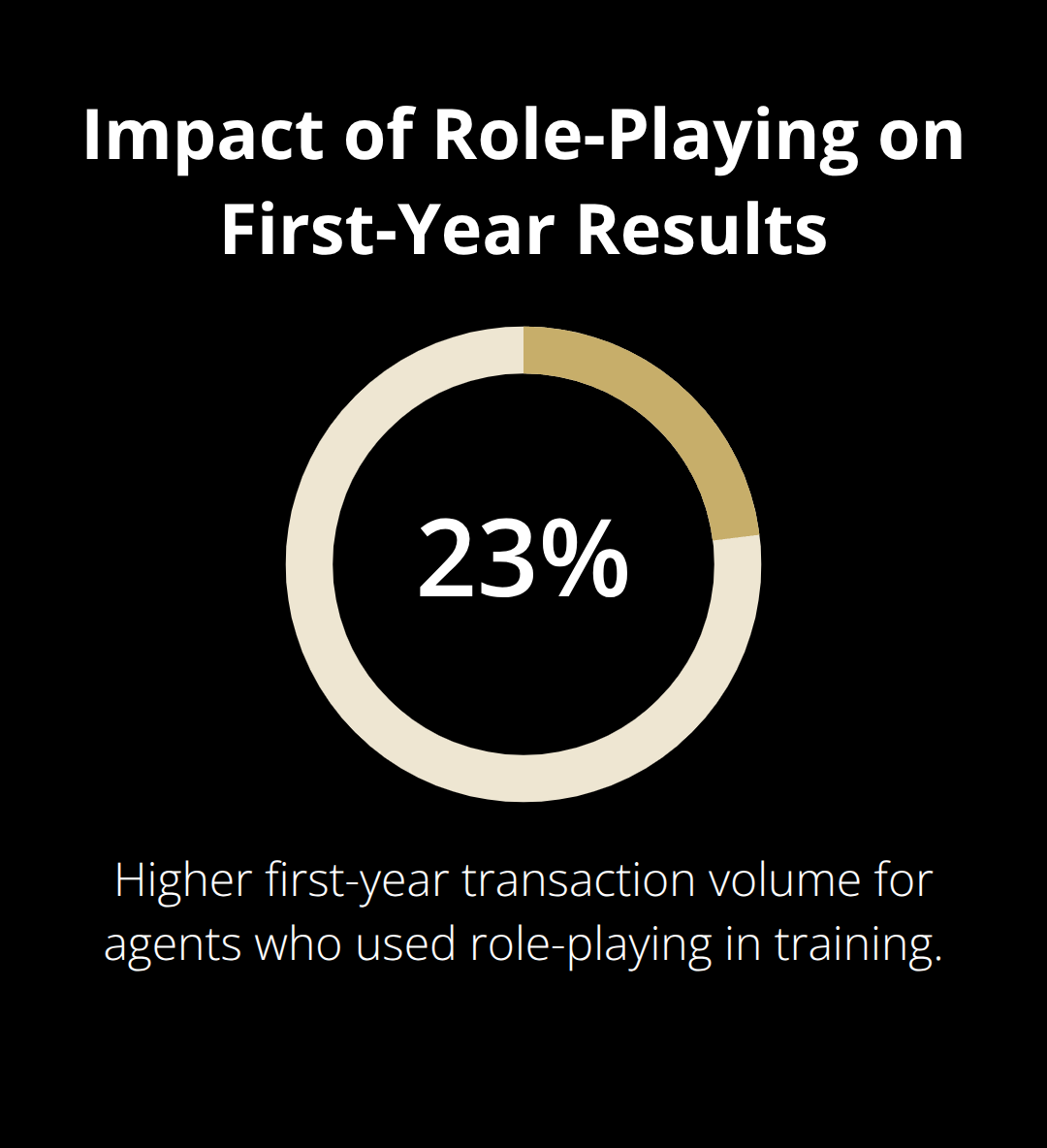
Agents who participated in role-playing exercises during training increased their transaction volume by an average of 23% in their first year compared to those who didn’t. The practical difference is measurable: you’re not just learning theory, you’re building muscle memory for client interactions. Simulation-based training works because it activates the same neural pathways your brain uses during actual deal negotiations.
Your body learns to recognize patterns, respond to pressure, and maintain composure in high-stakes conversations.
Mentors Compress Years Into Conversations
Access to experienced mentors and industry experts during training matters far more than most people realize. A mentor who has closed hundreds of deals knows which objections actually cost you sales and which ones don’t matter. They know which compliance shortcuts will destroy your career and which regulatory gray areas are actually safe. When a mentor shows you how they personally handle a difficult valuation dispute or a deal that’s falling apart, you gain years of experience compressed into a conversation. Many top broker training programs pair trainees with active practitioners for ongoing guidance beyond the formal course, and this ongoing access is where real confidence compounds.
Credentials That Clients Trust
Certification programs that carry industry recognition function differently than general training courses. A credential from an established organization signals to clients and deal partners that you’ve met specific competency standards. The Certified Business Intermediary designation from the International Business Brokers Association requires documented transaction experience and passing a rigorous exam, making it valuable in the market. When clients see credentials on your materials, they’re more likely to trust your valuations and negotiation strategy without constant second-guessing. This validation eliminates the constant internal doubt that plagues untrained brokers, replacing it with concrete evidence of your expertise.
The confidence you build through hands-on training and mentorship creates a foundation for the next phase of your broker education: staying current with how the industry itself is changing.
Current Trends in Broker Education and Development
Online and Hybrid Learning Models Transform Access
The broker education landscape has shifted dramatically over the past three years, and training programs that haven’t adapted are already obsolete. Remote and hybrid learning models now dominate the market, with companies recognizing the importance of continuous development. For brokers, this means you can access world-class instruction from specialists in your niche without relocating or sacrificing deal flow.
Not all online programs deliver equal value. The best ones combine live instructor interaction with recorded modules you can review repeatedly, asynchronous discussion forums where you learn from other brokers’ real deals, and virtual simulation software that mimics actual market conditions. Programs that rely purely on pre-recorded videos without instructor access or peer interaction fail because they remove the accountability and real-time feedback that builds confidence.
The practical advantage is clear: you can train during slow market periods and stay sharp when deals accelerate, rather than blocking off weeks for in-person bootcamps. Modern brokers need flexibility without sacrificing quality, which is why accessible, high-caliber education matters more than ever for professionals building sustainable careers.
Specialization Tracks Address Market Realities
Specialization has become non-negotiable in broker training. The days of generalist brokers handling everything from small retail sales to multi-million-dollar corporate acquisitions are ending because markets reward deep expertise. Training programs now offer dedicated tracks for business brokerage, real estate investment sales, SBA lending facilitation, and technology-enabled transactions.
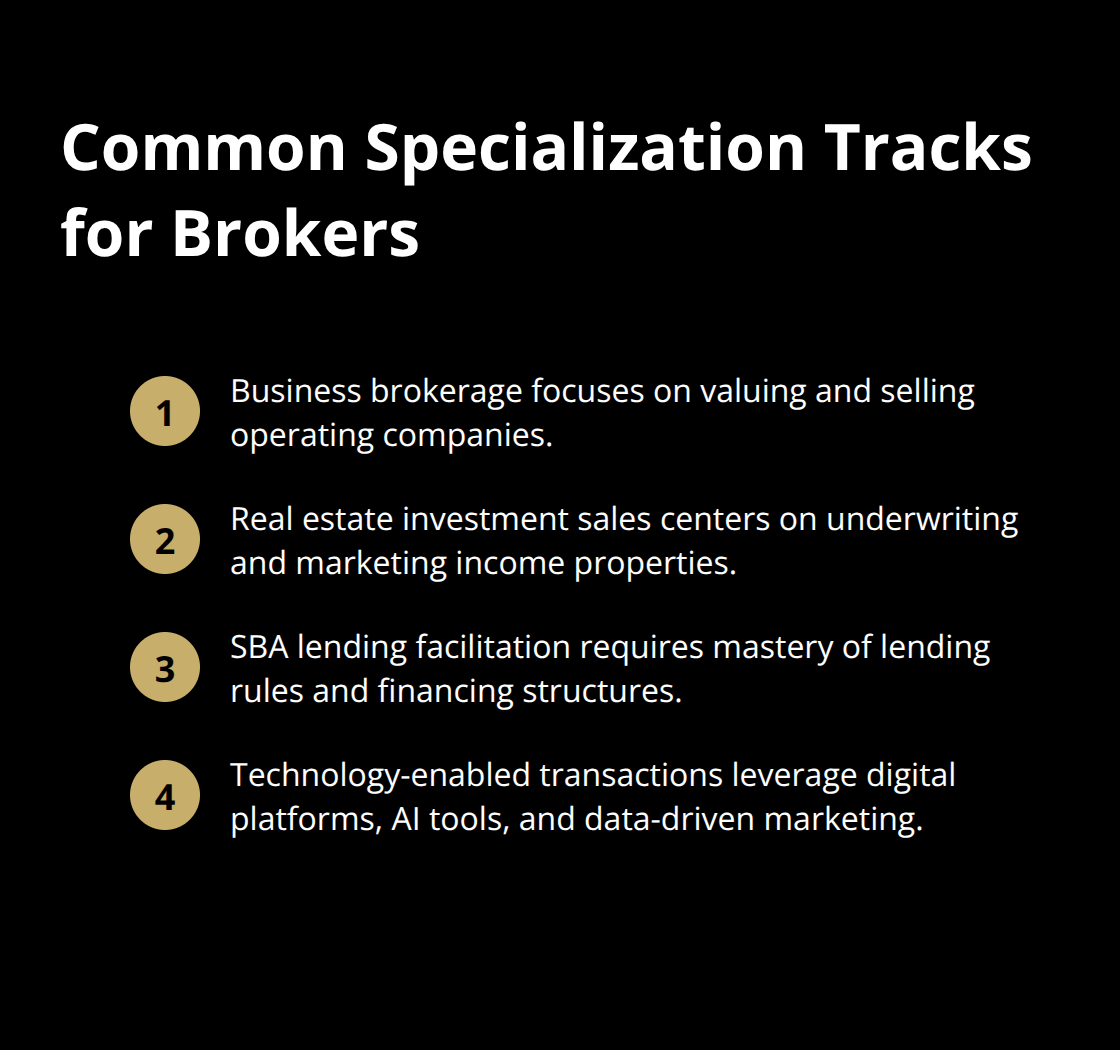
Each specialization requires different skill sets and market knowledge. A broker focused on SBA transactions needs to understand lending regulations and buyer financing options that don’t apply to cash real estate deals. Business brokerage specialists must master valuation methods specific to service companies, manufacturing operations, and e-commerce businesses. This targeted approach means you spend training time on skills that directly impact your chosen market rather than wasting hours on irrelevant content.
Technology Integration Separates Top Performers
Technology integration in broker education is no longer supplementary. Courses now teach you to use Customer Relationship Management platforms like HubSpot or Salesforce to track deal pipelines, leverage AI-powered valuation tools that analyze market data in minutes, and deploy digital marketing strategies that reach qualified buyers efficiently.
The most practical programs include hands-on modules where you configure these tools yourself rather than just watching demonstrations. Brokers trained on modern deal management software close transactions faster than those using traditional methods. You need training that teaches you not just how to use these tools but when to rely on them versus when to trust your judgment.
The gap between brokers who master technology and those who resist it has become the primary factor determining income and deal volume in competitive markets. Brokers who integrate AI-powered analysis with human judgment outperform those who choose either approach alone.
Final Thoughts
Broker training courses deliver three concrete outcomes that compound over your career: practical skills you apply immediately, confidence built through repetition and mentorship, and competitive advantage from technology and specialization. Brokers who complete structured training earn higher commissions because clients trust their analysis without constant questioning, close deals faster through pattern recognition, and protect their careers by understanding regulations deeply. The right program matches your skill level and market focus, emphasizes hands-on components with real instructors, and continues mentorship after the formal course ends.
We at Unbroker recognize that brokers need practical education paired with modern tools to succeed in competitive markets. Unbroker provides transparent platforms and expert support without the inflated fees that drain your profits, whether you’re building your brokerage skills or selling a business. Start with a program that matches your goals, commit to the hands-on practice, and watch your confidence and income grow.