Selling a business is one of the biggest decisions you’ll make. Most buyers start their search online, which means how you present your company matters enormously.
At Unbroker, we’ve seen firsthand that businesses with strong marketing attract serious buyers faster. This small business marketing toolkit gives you the essentials to stand out and build buyer confidence from day one.
Why Marketing Matters When Selling Your Business
Selling a business ranks among the biggest decisions you’ll make. Most business buyers start their search online, which means how you present your company matters enormously. Professional representation and strategic marketing significantly impact final sale prices and time on market. When you list your business without proper marketing, you hide it from the buyers who matter most. The difference is stark: professionally marketed businesses attract qualified, serious buyers who move faster through negotiations and close at higher valuations. Marketing isn’t optional when selling a business-it’s the difference between a quick sale at fair value and months of waiting with lowball offers.
How Buyers Actually Search for Businesses
Buyers today start their research online and expect to find comprehensive information immediately. They want to see your financials, understand your competitive position, review customer feedback, and assess the business’s growth potential all before contacting you. If your business lacks professional marketing materials, clear financial summaries, or visible customer testimonials, buyers assume something is wrong and move on to the next listing.
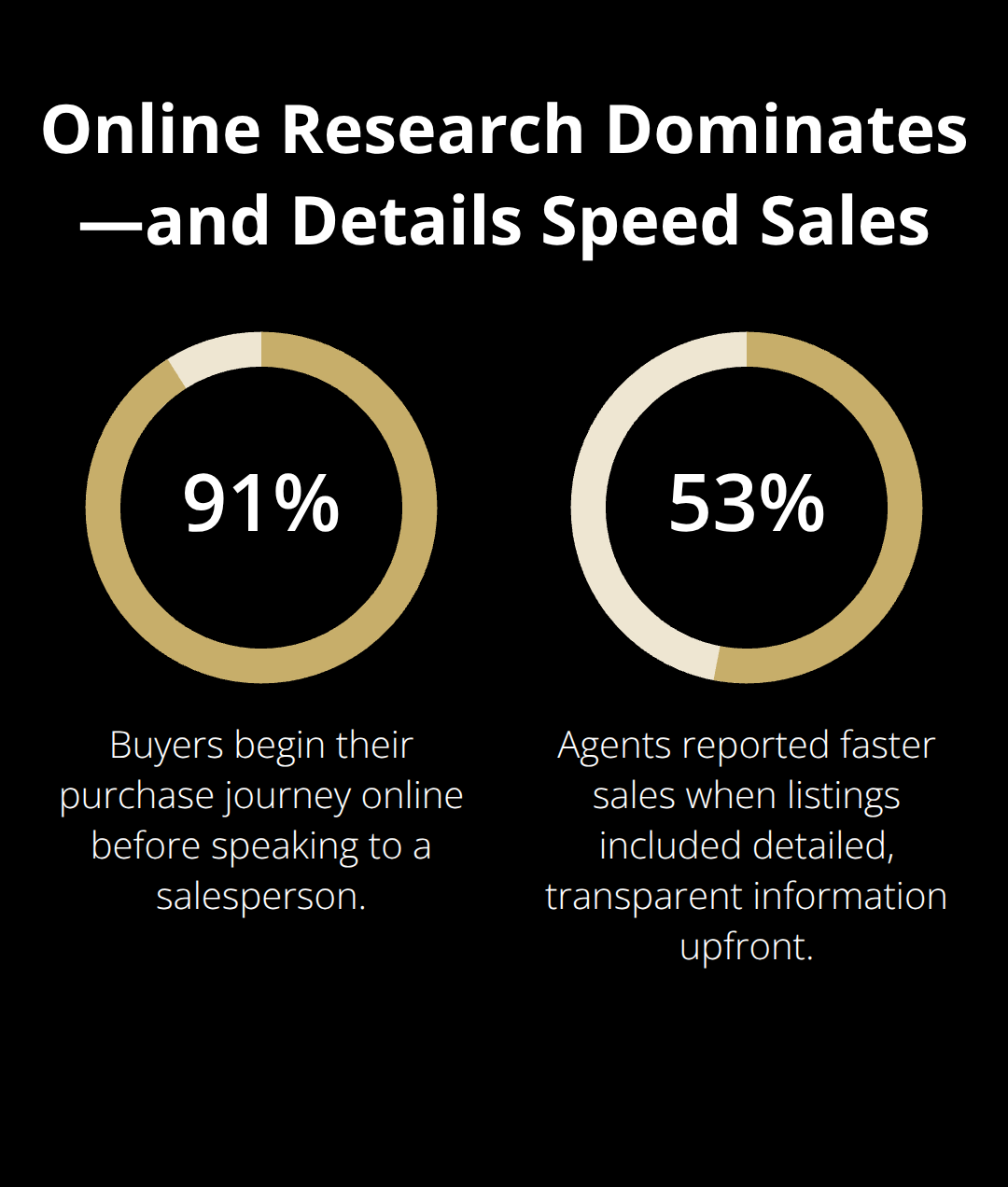
91% of buyers now begin their purchase journey online-before ever speaking to a salesperson. That window is small, which means your marketing materials must communicate value immediately and credibly.
Why Professional presentation Converts Browsers into Buyers
A polished, professional presentation signals that you’ve run a legitimate, organized operation. Buyers interpret poor marketing as a red flag. They wonder if financial records are disorganized, if hidden liabilities exist, or if the business isn’t truly profitable. Conversely, businesses presented with professional photography, clean financial summaries, customer testimonials, and a clear value proposition close faster and at higher prices.
Businesses with documented customer success close faster than those without. Your marketing materials serve as your first sales pitch. They set expectations, build credibility, and filter out tire-kickers so you spend time only with serious buyers who understand what they’re buying.
What Separates Successful Business Sales from Stalled Ones
The businesses that sell quickly share common traits: they present themselves professionally, they showcase customer satisfaction, and they communicate their value proposition clearly. Buyers respond to transparency and organization. When you invest in proper marketing materials (professional photos, financial summaries, testimonials), you signal confidence in your business and attract buyers ready to move forward.
The next section covers the specific tools and materials you need to build this professional presentation and start attracting qualified buyers immediately.
Essential Marketing Tools for Business Buyers
Your Business Listing Must Sell, Not Just Describe
Your business listing is your first impression, and it needs to work harder than a generic description posted anywhere. Serious buyers expect a professional business summary that covers what you sell, your revenue model, customer base, competitive advantages, and why the business matters. This isn’t a social media post-it’s a document that filters out tire-kickers and speaks directly to investors who understand your industry.
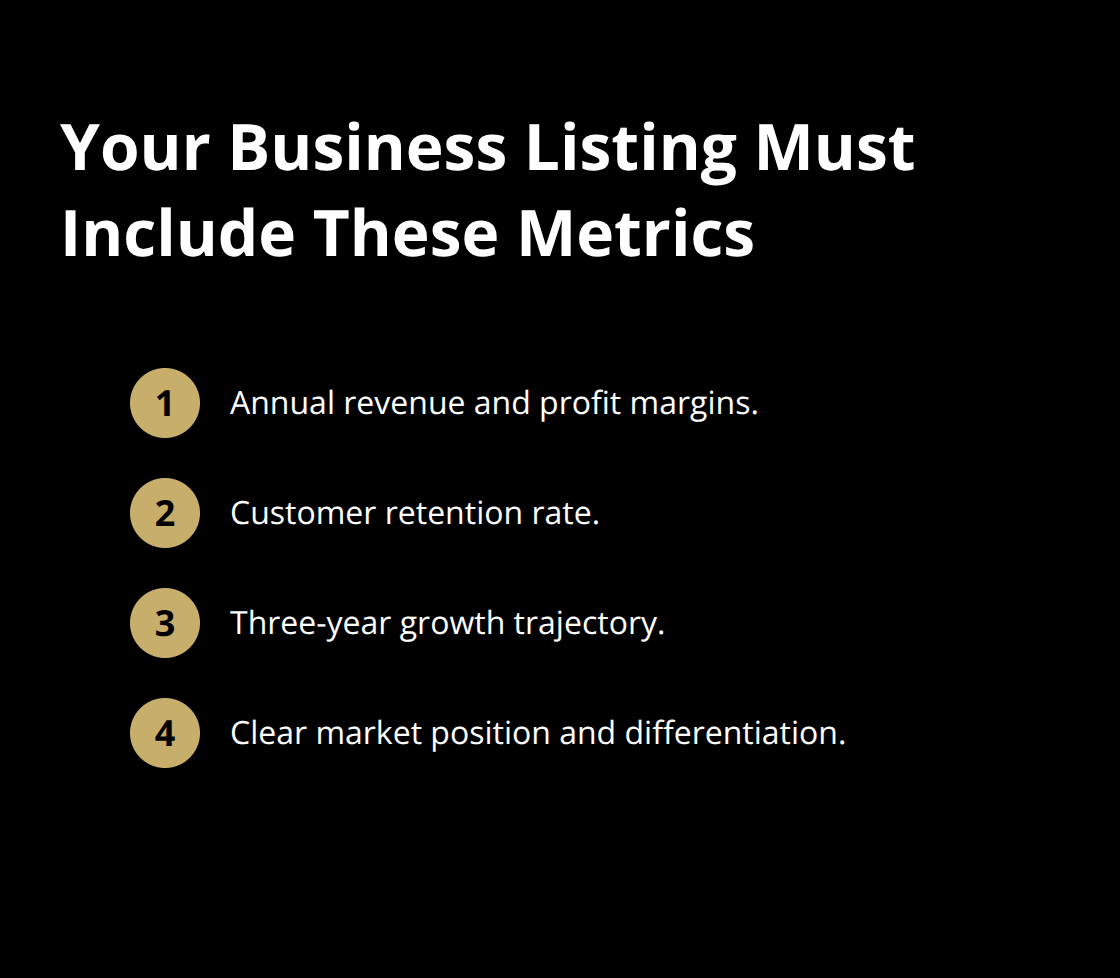
Include specific metrics: annual revenue, profit margins, customer retention rates, and growth trajectory over the past three years. Vague descriptions kill deals before they start. Buyers want numbers they can analyze. Your listing should also address market position clearly. What makes your business different from competitors? Why do customers choose you? If you can’t answer that in two sentences, your listing won’t convert browsers into serious inquiries.
The National Association of Realtors found that 53% of agents reported faster sales when properties included detailed, transparent information upfront. The same principle applies to business sales-transparency accelerates buyer confidence and shortens negotiation timelines.
Professional Photography Signals Legitimacy
High-quality visuals matter far more than most sellers realize. Professional photography of your physical location, operations, products, or team signals that you’ve invested in your business and take it seriously. If your business is primarily online or service-based, include screenshots of your platform, dashboard metrics, or client work samples. Poor-quality images or no images at all suggest the business isn’t worth presenting professionally, which raises red flags.
Buyers form opinions within seconds of viewing your listing. Strong visuals eliminate doubt and communicate professionalism before a single word registers.
Customer Testimonials Provide Proof That Works
Customer testimonials and reviews are non-negotiable. According to research from BrightLocal, consumers read online reviews before making a purchase decision, and the same psychology applies to business acquisitions. Buyers want proof that your customers are satisfied and that you’ve delivered consistent value.
Request written testimonials from your top five clients highlighting specific results they achieved working with you. Include their name, title, and company-anonymous testimonials carry zero weight. If your business has case studies showing measurable outcomes for clients, include those too. A case study demonstrating how you helped a customer increase revenue by 40% or reduce costs by 25% provides concrete evidence of your value proposition.
These materials transform your listing from a description into a sales document that moves qualified buyers toward making an offer. With your marketing toolkit in place, the next step involves identifying exactly who you’re trying to reach and which channels will connect you with serious buyers ready to move forward.
Who Should Buy Your Business and Where to Find Them
Knowing who you’re selling to changes everything about how you market your business. Too many sellers broadcast their listing everywhere and hope someone bites. That approach wastes time and money. Instead, identify the specific buyer profile most likely to close quickly at your target price, then reach them through channels where they actually look.
Understanding Your Three Core Buyer Types
A strategic buyer in your industry searches differently than a financial investor or competitor. An industry insider cares about operational synergies and customer relationships. A financial buyer wants recurring revenue and scalable systems. A competitor values your customer base and market position.
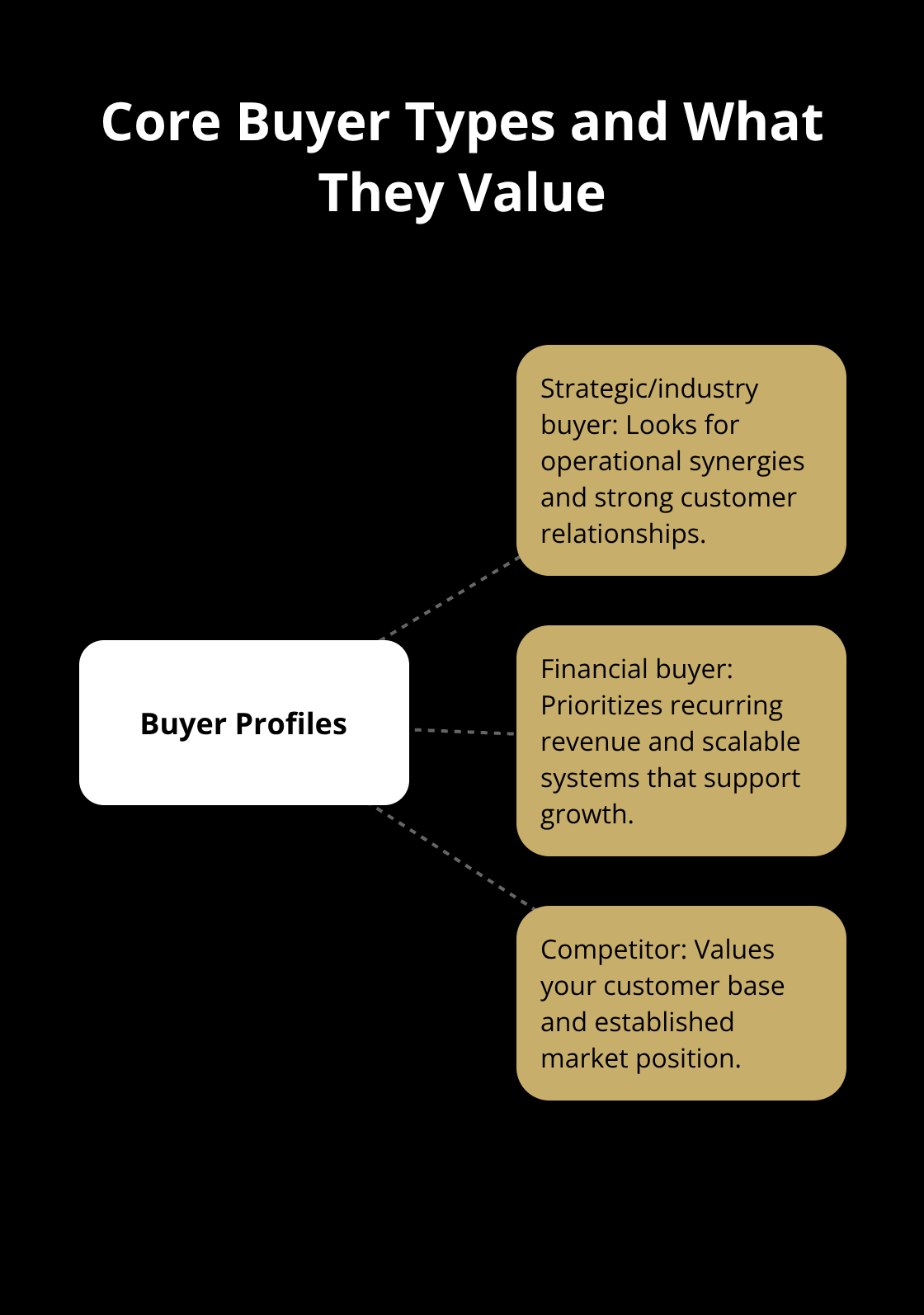
Each profile has different priorities, and your marketing message needs to reflect what matters to them.
Start with three characteristics: their industry background, what they accomplish through an acquisition, and their typical budget range. This narrows your marketing focus dramatically. If you sell a service business, target other service providers in adjacent markets who want to expand geographically or add new offerings. If you run a software company, reach SaaS investors who understand recurring revenue models. If you operate a retail location, target multi-unit operators looking to grow their footprint.
Research shows that buyer personas improve conversion rates significantly. Your marketing message should speak directly to what motivates your specific buyer, not generic audiences.
Reach Buyers Through Channels They Actually Use
Once you know who you’re targeting, reach them through channels where they actively search. Most business acquisitions happen through personal networks, industry publications, and specialized marketplaces rather than general social media. If you sell a B2B service business, LinkedIn is essential because decision-makers spend time there daily. Industry associations and trade shows where your target buyers gather matter far more than Facebook ads.
A manufacturing business attracts serious buyers through specialized channels, not Instagram. Niche business marketplaces that cater to your specific industry outperform general platforms. Track which channels produce inquiries (ask every potential buyer how they found your listing). After two weeks of marketing activity, you’ll see clear patterns showing which channels work. Double down on channels generating qualified leads and pause those generating tire-kickers.
Measure What Actually Works
Measure success through specific metrics: number of qualified inquiries per week, average time from inquiry to serious negotiation, and final sale price relative to your asking price. If you’re getting 15 inquiries weekly but only one converts to a serious buyer, your marketing reaches the wrong audience. If you’re getting three qualified inquiries weekly and two move to negotiation, your targeting works.
Track your cost per qualified lead by dividing total marketing spend by the number of serious inquiries. Many sellers spend $2,000 to $5,000 on professional photography, listing optimization, and targeted advertising to reach the right buyers, then close at prices 15 to 25 percent higher than unmarketed businesses. That investment returns itself immediately through higher valuations and faster closes.
Final Thoughts
Marketing your business for sale isn’t optional-it’s the foundation of a successful exit. The small business marketing toolkit we’ve covered addresses what matters most to buyers: professional presentation, credible proof of value, and strategic targeting. Professionally marketed businesses consistently outperform unmarketed ones by 15 to 25 percent in final sale price and spend significantly less time negotiating with unqualified buyers.
Your business listing, professional photography, and customer testimonials work together to filter out tire-kickers and attract serious buyers ready to move forward. When you identify your specific buyer profile and reach them through the right channels, you eliminate wasted marketing spend and accelerate your path to closing. Tracking metrics like qualified inquiries per week and cost per lead keeps you focused on what actually works.
Buyers expect professional marketing materials before they’ll seriously consider your business. We at Unbroker built our platform to help sellers execute this strategy without the high fees traditional brokers charge-Unbroker provides premium marketing tools, legal templates, and buyer access at transparent, low-cost pricing so you keep more of what your business is worth. Your next step is straightforward: gather your financial metrics, request testimonials from your best clients, and invest in professional photography.