Selling your business is one of the biggest financial decisions you’ll make. The wrong buyer can derail your exit, drain your time, and leave you with regrets.
At Unbroker, we’ve seen deals fall apart because sellers didn’t establish clear buyer qualification criteria upfront. The good news is that vetting buyers properly protects your interests and speeds up the entire process.
Red Flags That Stop Smart Sellers in Their Tracks
Unproven Financing and Vague Funding Sources
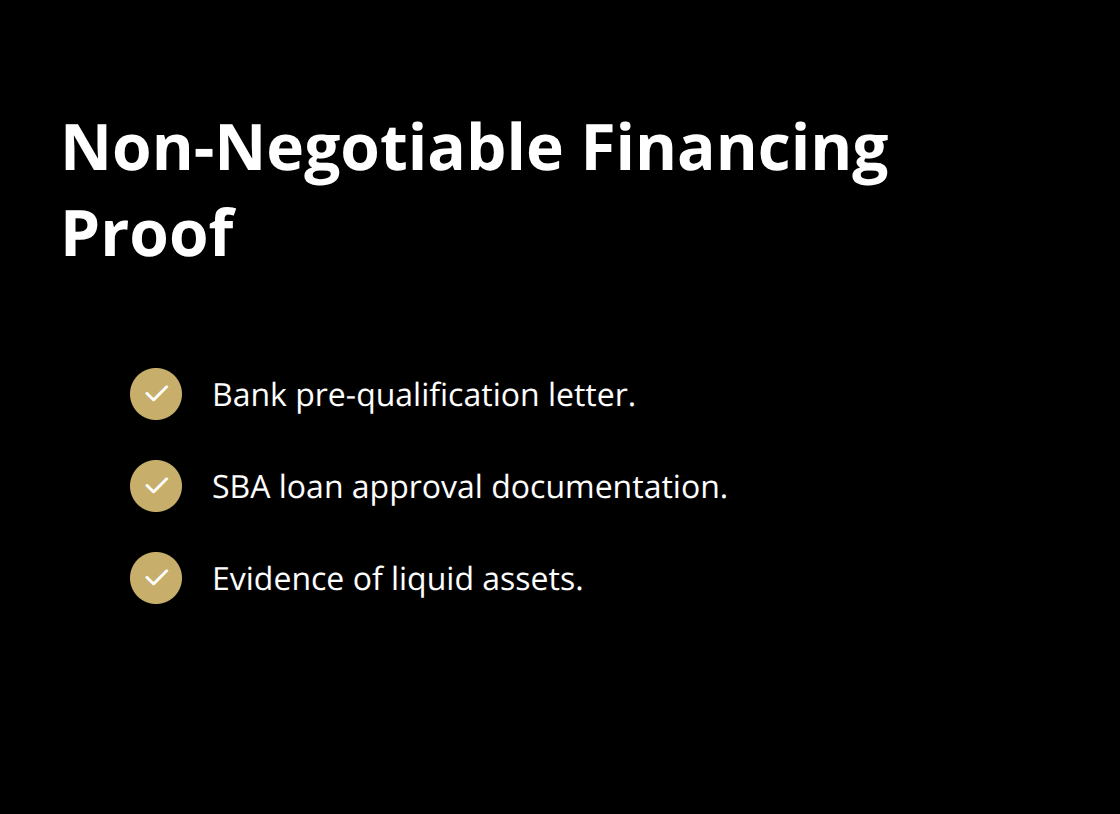
A buyer who talks money before proving they have it is a buyer you should walk away from. We at Unbroker see this pattern repeatedly: sellers get excited about an offer, then discover mid-process that the buyer has no actual financing lined up. Ask for proof upfront. A pre-qualification letter from a bank, SBA loan approval documentation, or evidence of liquid assets isn’t negotiable. If a buyer resists providing this, they’re either not serious or they’re hiding something.
Funding sources that seem vague or questionable create unnecessary risk for you. A buyer who mentions offshore accounts, family loans with no documentation, or funding contingent on selling their own business signals trouble ahead. These arrangements often collapse when the buyer faces unexpected obstacles.
Lowball Offers and Aggressive Pressure
Lowball offers paired with aggressive pressure tactics reveal a buyer’s true intentions. A buyer who comes in significantly below asking price, then demands you cover their legal fees and accelerate the timeline, isn’t negotiating in good faith. They’re testing whether you’re desperate. Real buyers understand business valuations. They respect your time. They make reasonable offers backed by legitimate reasoning.
Track Record and Previous Acquisitions
Track record matters enormously here. Research the buyer’s previous acquisitions if they’ve made them. Before buying a business, conducting a thorough background check can reveal hidden liabilities, legal disputes, and financial red flags. A buyer with a history of acquiring companies and then gutting them or running them into the ground within two years signals they don’t care about long-term value-they care about short-term extraction (and your business could be next).
Check references from previous sellers they’ve worked with. If they won’t provide them, that absence is itself a red flag. A buyer with nothing to hide shares their history openly. These patterns-unproven financing, unrealistic offers, and questionable track records-tell you everything you need to know before moving to the next stage of evaluation.
What Separates Serious Buyers from Time Wasters
Financial Proof Arrives Fast
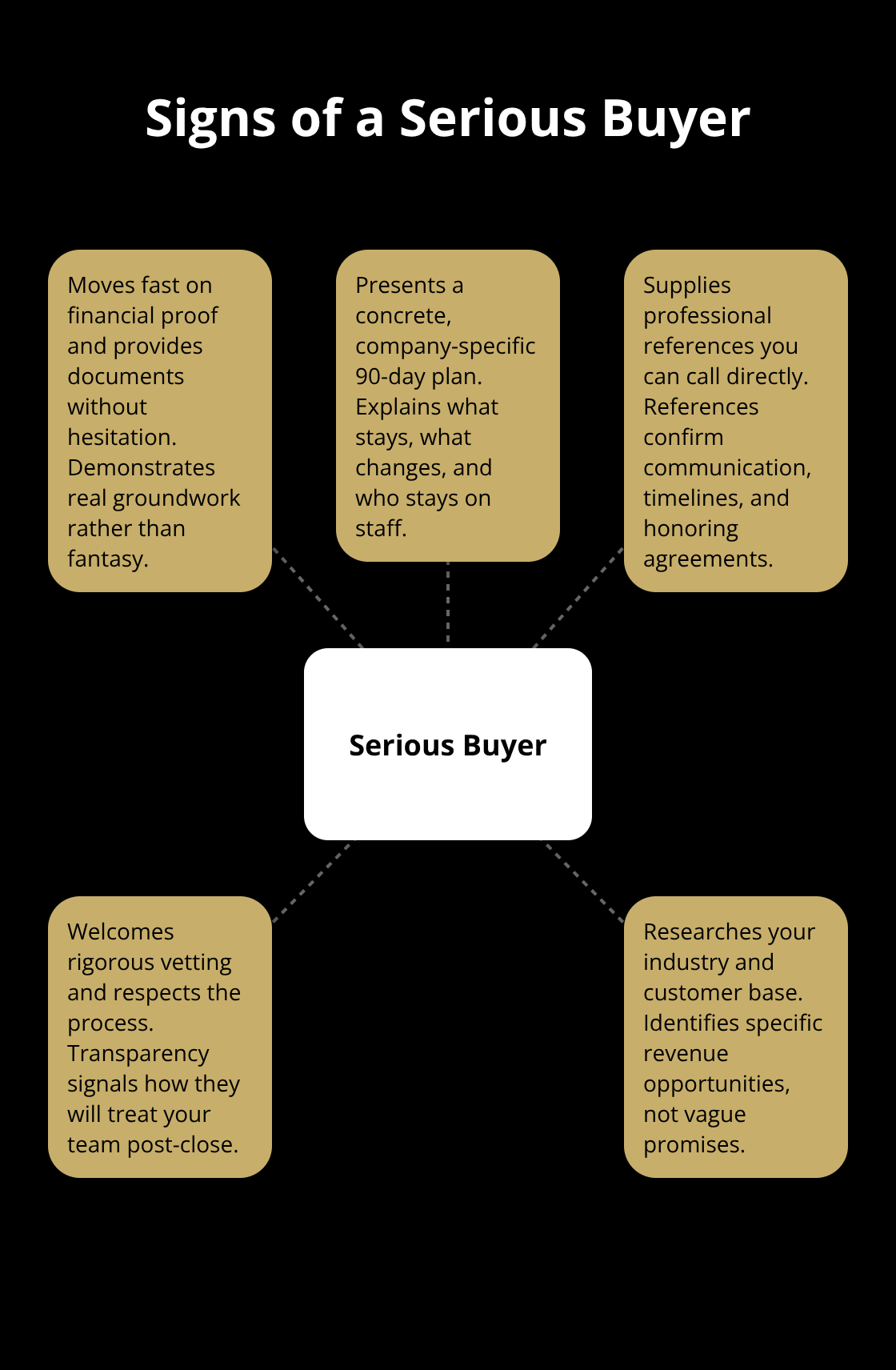
A serious buyer moves fast on financial proof. They understand that you need verification before conversations progress, and they deliver it without hesitation. Request a pre-qualification letter from their lender within the first week of initial discussions. If they dodge this request or claim they’ll handle it later, they’re not serious. SBA loan documentation, bank statements showing liquid assets, or proof of investor backing should appear upfront. The speed matters because it tells you whether they’ve actually done the groundwork or are still in fantasy mode. A buyer who pulls together financial proof quickly has already consulted with lenders, discussed terms, and made real commitments. A buyer who stalls is still shopping without real capital behind their interest.
A Concrete Business Plan Reveals Real Thinking
Beyond financing, assess their business plan for your company specifically. A serious buyer articulates what they’ll do with your business in concrete terms, not vague promises about growth. They’ve researched your industry, identified specific revenue opportunities, and understand your customer base. Ask them to walk you through their first 90 days of ownership. What stays the same? What changes? Who stays on staff? Real buyers have answers because they’ve already thought this through. They’ve likely consulted with advisors, reviewed your financials in detail, and stress-tested their assumptions. A buyer who fumbles these questions or gives generic responses hasn’t done their homework.
References Tell the Real Story
Professional references from previous sellers or business partners matter enormously. Call these references directly. Ask specific questions: Did this buyer honor the purchase agreement? Did they communicate clearly during integration? Did they retain key staff? Did they meet the timeline they promised? A buyer with solid references from previous transactions has a proven track record of following through. Someone with no references or who refuses to provide them is hiding something.
Vetting Works Both Ways
Serious buyers expect rigorous vetting because they have nothing to hide. They know that a thorough evaluation protects both parties and sets the foundation for a smoother transition after closing. This mutual respect during qualification signals how the buyer will treat your business and team after the sale closes. The buyers who resist your questions or resent your scrutiny reveal their true character before you sign anything. Those who welcome your investigation demonstrate the professionalism and transparency you want in a new owner.
How to Vet Buyers Effectively
Verify Financial Capacity Thoroughly
Start with financial verification that goes beyond a pre-qualification letter. Request recent bank statements covering the last three months, tax returns for the past two years, and documentation of any investor commitments. A buyer with legitimate capital provides these documents without hesitation under a non-disclosure agreement. Cross-reference their claimed liquid assets against their bank statements-numbers that don’t align reveal either dishonesty or financial instability.
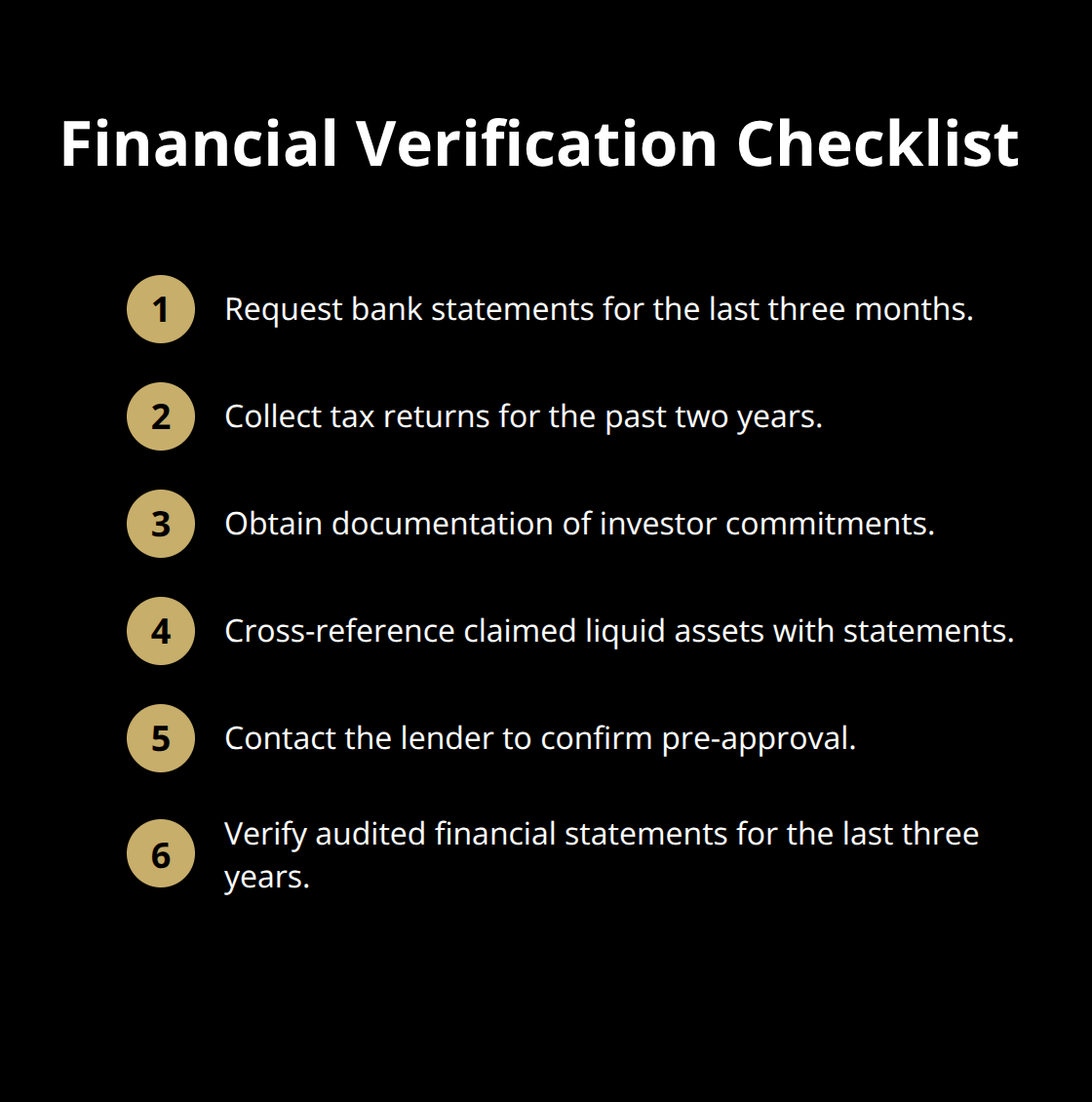
Contact their lender directly to confirm the loan pre-approval is real and that the buyer hasn’t already maxed out their borrowing capacity elsewhere. Verify financial information including audited financial statements over the last three years to ensure thorough due diligence. Buyers who pass rigorous financial scrutiny tend to close on time because their funding is solid.
Assess Intent and Business Values
Beyond finances, investigate their intent and alignment with your business values. Request a detailed written proposal that outlines how they plan to operate your company, specific revenue targets for year one, staffing decisions, and their timeline for integration. Ask them to explain why they’re acquiring your business specifically-not just any business in your industry. Buyers determine value by what they are willing and able to pay, not by what the seller believes the business is worth. A buyer focused on cultural fit discusses how they’ll preserve what makes your business work, which employees they’ll retain, and how they’ll maintain customer relationships. Buyers pursuing quick extraction typically speak in generic terms about synergies and cost-cutting. These patterns reveal their true priorities before you sign anything.
Contact Previous Sellers and References
Schedule a call with at least two previous sellers they’ve worked with and ask direct questions about follow-through, communication during the sale process, and whether the buyer honored the purchase agreement terms. If they resist providing references or if references express hesitation, trust that signal. A buyer serious about long-term ownership welcomes scrutiny because they have nothing to hide and understand that thorough vetting creates stronger partnerships after closing. These conversations (conducted directly, not through intermediaries) expose whether the buyer treats sellers fairly and integrates businesses successfully. A reference who hesitates or gives vague answers signals potential problems ahead.
Final Thoughts
Buyer qualification criteria separate successful exits from painful ones. Financial verification prevents deals from collapsing mid-process when funding evaporates, while assessing business plans protects your company culture and employee relationships. References reveal whether a buyer actually honors promises or abandons commitments after closing-these steps cost time upfront but save you from far greater losses later.
A buyer who welcomes rigorous scrutiny, provides documentation without resistance, and shares their track record openly is someone you can work with. A buyer who dodges questions, resists verification, or refuses references shows their true character before you sign anything. Listen to these signals and trust your evaluation process.
We at Unbroker understand that selling your business requires both protection and efficiency. Visit Unbroker to explore how we help sellers establish clear buyer qualification standards and close with confidence through our Full Service Business Sale or Assisted Business Sale options.