Business owners need fast, reliable valuations to make informed decisions. Traditional appraisal methods often take weeks and cost thousands of dollars.
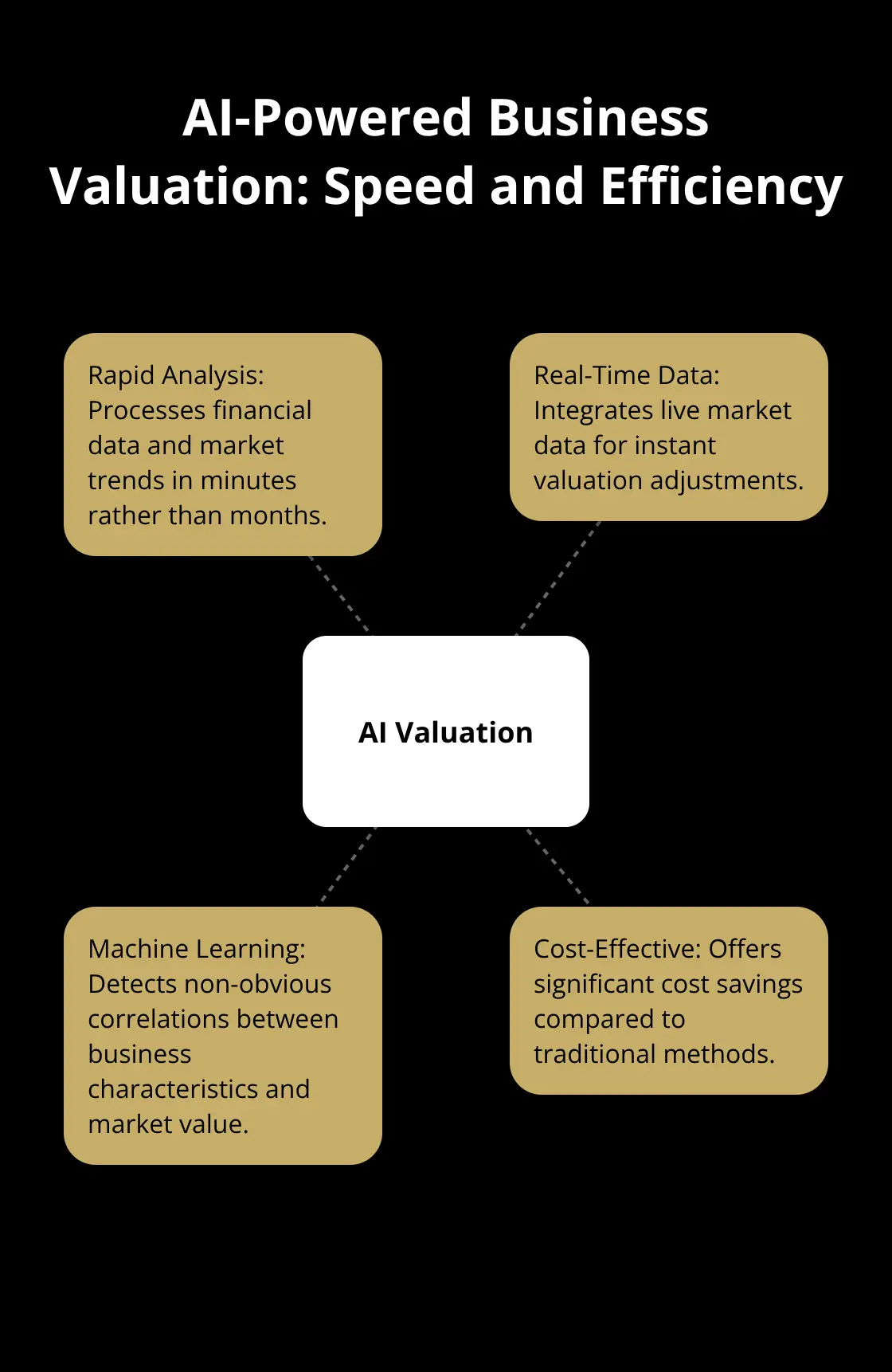
Digital valuation tools powered by artificial intelligence promise to change this landscape. We at Unbroker see growing interest in AI-driven solutions that can analyze financial data and market trends in minutes rather than months.
But can these automated systems truly replace human expertise when determining what your business is worth?
How AI Analyzes Your Business Value
AI business valuation systems process financial data through sophisticated machine learning algorithms that examine patterns across thousands of comparable transactions. These platforms analyze your revenue streams, profit margins, growth rates, and debt-to-equity ratios against similar companies in your industry. BizEquity incorporates methods from each major valuation approach (income, asset and market) and utilizes market data from comparable sales, while platforms like Equidam use hybrid methodologies that combine discounted cash flow, market multiples, and risk-adjusted approaches. The algorithms weight each financial metric based on industry standards and current market conditions.
Real-Time Market Data Creates Dynamic Valuations
Modern AI valuation tools integrate live market data from stock exchanges, M&A databases, and economic indicators to adjust business values instantly. DataRobot’s platform enhances forecasting with advanced AI-driven capabilities that learn, adapt, and scale as market conditions evolve. This integration means your business value reflects current market sentiment rather than outdated historical averages. Traditional appraisals use static data that may be months old (sometimes even older), while AI systems incorporate yesterday’s market movements into today’s valuation.
Machine Learning Reveals Hidden Value Patterns
AI algorithms detect non-obvious correlations between business characteristics and market value that human appraisers often miss. These systems analyze customer concentration risks, seasonal revenue patterns, and competitive factors simultaneously. Valutico’s platform provides the financial services industry and valuation practitioners with data-driven tools and identifies which metrics drive value in your specific industry. The machine learning models continuously improve accuracy as they process more transactions and learn from market outcomes to refine future predictions.
Data Quality Determines AI Accuracy
The effectiveness of AI valuation depends entirely on the quality and completeness of input data. Incomplete financial records or missing market information can lead to significant valuation errors. Most AI platforms require at least three years of financial statements, current market data, and detailed business information to produce reliable results. Poor data quality affects the algorithms’ ability to make accurate comparisons and predictions (which explains why some AI valuations vary dramatically from professional appraisals).
However, even the most sophisticated AI systems face limitations when they encounter unique business models or complex ownership structures that require human judgment and expertise.
How Accurate Are AI Business Valuations
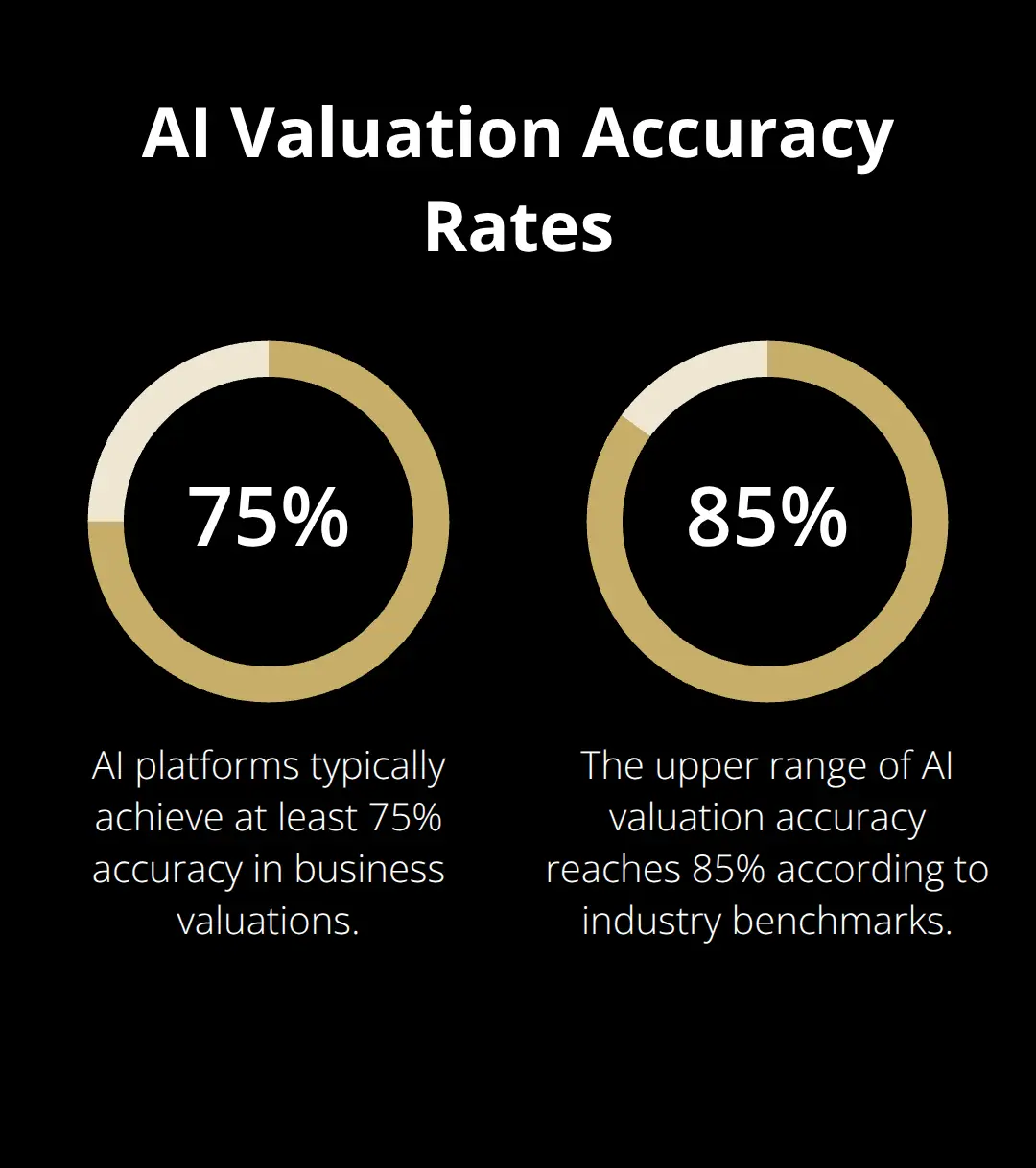
AI valuations deliver results in minutes compared to traditional appraisals that take 2-6 weeks, but speed creates trade-offs. Professional appraisers follow certified standards for established businesses with standard operations, while AI platforms typically reach 75-85% accuracy according to industry benchmarks. The gap widens significantly for businesses with unique characteristics or complex ownership structures.
AI Excels at Standard Business Models
AI performs best when it values straightforward businesses with clear financial patterns and abundant comparable data. Retail stores, restaurants, and service companies with consistent revenue streams see AI accuracy rates above 80%. These systems process thousands of comparable transactions instantly and identify market trends that human appraisers might miss.
AI struggles with businesses that have significant intangible assets like brand value, customer relationships, or proprietary technology. A software company with strong intellectual property might receive an AI valuation 30-40% below its actual market value because algorithms cannot quantify these intangible elements effectively.
Complex Situations Require Human Judgment
Professional appraisers become essential when businesses involve family ownership disputes, pending litigation, or unusual asset structures. The Estate of Hoensheid v. Commissioner case demonstrates how inadequate valuations can cost millions in tax disputes (highlighting the financial consequences of poor valuation practices).
AI cannot make normalization adjustments for one-time expenses, owner compensation above market rates, or family employment situations that significantly impact true business value. Professional appraisers also understand regulatory requirements – the IRS demands qualified appraisals from certified professionals for tax purposes, which AI-generated estimates cannot provide.
Speed vs Precision Trade-offs
The accuracy gap between AI and professional valuations reflects fundamental differences in methodology. AI systems excel at pattern recognition across large datasets but miss contextual factors that experienced appraisers catch through direct business analysis. This accuracy difference becomes more pronounced when businesses face unique circumstances or operate in niche markets with limited comparable data.
While AI offers impressive speed advantages, these limitations raise important questions about cost-effectiveness and risk management that business owners must weigh carefully.
Are AI Valuations Worth the Cost and Risk?
AI business valuations cost between $200-$2,000 compared to professional appraisals that range from $5,000-$25,000 for mid-market companies. This dramatic price difference makes AI attractive for initial assessments or regular monitoring, but creates false economies when precision matters.
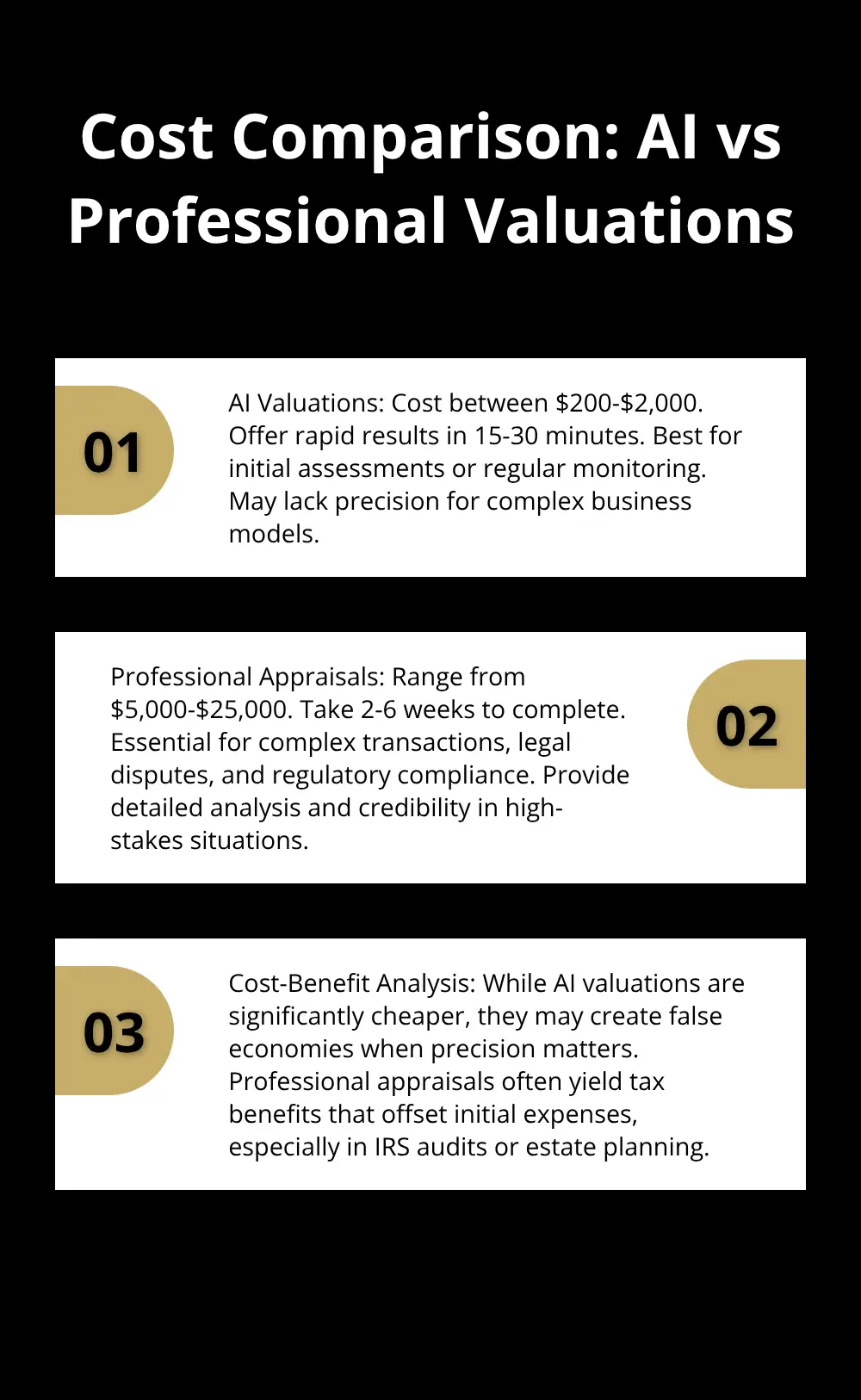
McKinsey reports that 78% of organizations use AI in at least one business function, yet many have experienced negative consequences from AI deployment. The speed advantage is undeniable – AI systems deliver results in 15-30 minutes while traditional appraisals require 2-6 weeks, but this efficiency comes with significant blind spots.
Training Data Creates Systematic Errors
AI valuation platforms train on historical transaction data that may not represent current market conditions or unique business characteristics. These systems often undervalue businesses in emerging industries or overvalue companies in declining sectors because their training data reflects past market patterns rather than future potential. Machine learning algorithms can perpetuate biases present in their source data, which typically comes from publicly reported transactions that exclude many private company sales. This creates systematic errors where AI consistently misvalues certain business types – family-owned companies, businesses with significant customer concentration, or companies with unusual asset structures receive inaccurate valuations because the training data lacks sufficient examples of these situations.
Oversimplification Risks Compound Over Time
AI systems reduce complex businesses to standardized metrics and miss critical factors that drive actual market value. A manufacturing company with long-term contracts, specialized equipment, or regulatory advantages might receive a generic industry multiple that ignores these value drivers. The algorithms cannot assess management quality, competitive moats, or strategic positioning that professional appraisers evaluate through direct business analysis. This oversimplification becomes dangerous when business owners make major decisions based on AI valuations that miss significant portions of actual value through incomplete analysis, particularly for businesses with unique operational characteristics.
Hidden Costs Emerge in High-Stakes Situations
The apparent cost savings of AI valuations disappear when businesses face legal scrutiny, tax disputes, or complex transactions. Professional appraisals withstand cross-examination in divorce proceedings or litigation, while AI-generated estimates lack the credibility and documentation required in these situations. The cost of professional appraisals often yields significant tax benefits that offset initial expenses, especially when businesses face IRS audits or estate planning requirements that demand qualified appraisals from certified professionals.
Final Thoughts
AI serves as a powerful complement to traditional business valuation rather than a complete replacement. Digital valuation tools excel at initial assessments, market screening, and regular monitoring where speed and cost matter more than precision. Professional appraisers remain essential for complex transactions, legal disputes, and situations that require regulatory compliance.
The most effective approach combines AI’s data processing capabilities with human expertise and judgment. Use AI platforms for preliminary valuations and market comparisons, then engage certified appraisers when stakes are high or business characteristics are unique. This hybrid model maximizes efficiency while it maintains accuracy and credibility.
Future developments will likely improve AI’s ability to assess intangible assets and handle complex business structures. However, the fundamental need for human interpretation and contextual analysis will persist (especially in high-stakes situations that require professional validation). When you’re ready to sell your business, Unbroker combines modern technology with transparent processes to support you throughout the sale.