Most business owners spend years building their companies but fail to prepare for the most important transaction of their lives. The difference between a successful exit and a disappointing sale often comes down to proper planning.
We at Unbroker see this pattern repeatedly. Smart exit planning can increase your business value by 20-40% and reduce time to sale by months.

What Financial Documents Do Buyers Actually Need?
Your financial records determine whether buyers take you seriously or walk away within the first week. Prospective buyers require three years of complete financial statements, tax returns, and bank statements according to M&A professionals. Missing or incomplete documentation kills potential deals before negotiations even begin. Clean financial records also directly impact your valuation – businesses with organized financials sell for higher prices than those with messy books.
Prepare Your Numbers for Audit-Level Scrutiny
Start with your profit and loss statements, balance sheets, and cash flow statements for the past three years. Tax returns must match these financial statements exactly – any discrepancies raise red flags that can derail negotiations. Your accountant should prepare these documents as if they face an IRS audit. Include detailed accounts receivable and payable reports, inventory valuations, and equipment depreciation schedules. Buyers scrutinize every line item, especially revenue streams that repeat and customer concentration risks.
Increase Your EBITDA Before You Go to Market
Smart sellers focus on earnings before interest, taxes, depreciation, and amortization because buyers pay multiples based on this figure. Cut unnecessary expenses ruthlessly – eliminate personal expenses that run through the business, reduce owner perks, and streamline operations. EBITDA multiples depend on company size, profitability, growth prospects, and industry factors. Professional business valuations cost $5,000 to $15,000 but prevent costly mistakes that keep your business on the market for months.
Understand Your Real Market Value
Professional appraisers with M&A experience provide realistic price ranges rather than exact figures because buyer perceptions vary significantly. Asset-based valuations work for manufacturers, while service companies need revenue multiple approaches. The American Society of Appraisers maintains directories of qualified professionals who understand your industry specifics. Annual revenue of $2 million typically supports valuations between $1.5 million and $4 million based on profitability, growth trends, and market conditions.
Once you establish your financial foundation, you need to examine how well your business operates without you at the helm.
Can Your Business Run Without You?
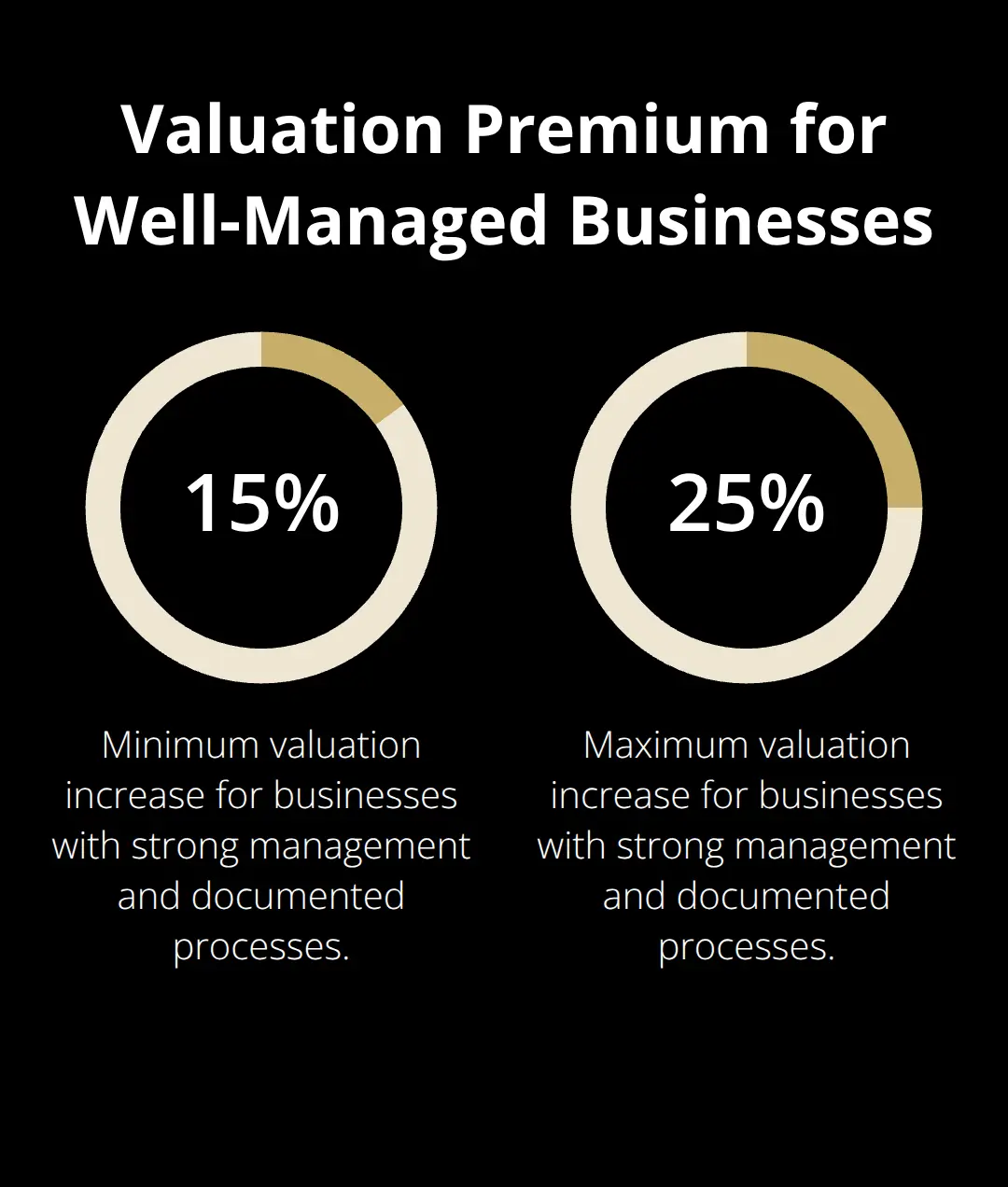
Buyers pay premium prices for businesses that operate independently of their owners. Companies with strong management teams and documented processes sell for 15-25% higher valuations than owner-dependent businesses according to middle-market M&A data. Your personal involvement in daily operations becomes a liability that reduces buyer interest and sale price. Start to build management depth at least 18 months before you go to market – this timeline allows new managers to prove their capabilities and reduces buyer concerns about post-sale performance.
Document Every Process Before You List
Create standard operating procedures for every aspect of your business from customer service protocols to inventory management systems. Research shows that documented processes help drive bottom-line performance during business transformations. Write step-by-step guides that any competent manager can follow without your input. Include supplier contact information, customer relationship histories, and decision frameworks. Test these procedures when you take extended vacations – if your business maintains performance during your absence, buyers gain confidence in its stability.
Build Your Management Team Now
Promote from within or hire experienced managers for key departments like sales, operations, and finance. Strong managers are important factors in driving premium M&A deals because the business continues to generate revenue after you exit. Avoid family members in critical roles unless they possess genuine qualifications – nepotism concerns make buyers nervous about post-sale performance (especially in family-owned businesses). Create employment contracts that incentivize your management team to stay through the transition period.
Address Legal Compliance Issues
Clean up all legal issues including outdated contracts, intellectual property registrations, and regulatory compliance gaps that surface during buyer due diligence reviews. Regulatory compliance prevents delays or legal issues during a sale, as licenses, permits, and industry-specific regulations must be current. Update vendor agreements, employee handbooks, and insurance policies to current standards. Resolve any pending litigation or regulatory violations that could derail negotiations.
With your operations streamlined and management team in place, you need to focus on how you present your business to potential buyers in the marketplace.
How Do You Attract Premium Buyers?
Your marketing approach determines whether you attract tire-kickers or serious buyers with deep pockets. Professional business sale materials generate more qualified inquiries than amateur presentations according to M&A industry data. Start with a comprehensive information memorandum that highlights your revenue growth trends, profit margins, and competitive advantages without revealing your company name. Include three years of financial summaries, customer retention rates, and market position data that buyers scrutinize during initial screening. Photography matters more than most owners realize – professional images of your facility, equipment, and team create immediate credibility that separates your listing from amateur competitors.
Target Strategic Buyers Who Pay Premium Prices
Strategic buyers pay 20-30% more than financial buyers because they see synergies that justify higher valuations. Identify competitors in adjacent markets, suppliers who want vertical integration, and customers who consider backward integration into your industry. Private equity groups focus on EBITDA multiples and growth potential, while strategic buyers consider operational efficiencies and market expansion opportunities. Research recent acquisitions in your industry to identify active buyers and their acquisition criteria. Professional networks through industry associations often connect you with qualified buyers better than online marketplaces that attract unqualified prospects.

Create Professional Marketing Materials That Convert
Your information memorandum serves as your business’s resume and must impress sophisticated buyers within the first five pages. Include executive summaries that highlight key financial metrics, growth trajectories, and competitive moats that differentiate your company. Professional formatting with charts, graphs, and clean layouts demonstrates attention to detail that buyers expect from well-run businesses. Avoid personal photos or casual language that undermines your professional image (buyers want to see serious business operations, not family snapshots).
Protect Confidentiality While Marketing Aggressively
Blind advertisements that describe your business without identifying details protect employee morale and customer relationships during the sale process. Require signed confidentiality agreements before you share financial information or company names with potential buyers. Create a two-tier information disclosure system – basic industry and financial metrics for initial screening, detailed operations data only after serious interest confirmation. Monitor who receives information and track their progress through your sales funnel to maintain control over sensitive data. Professional business brokers understand confidentiality protocols that prevent information leaks to competitors or employees who might panic about job security.
Final Thoughts
Successful exit planning demands 18-24 months of dedicated preparation before you list your business for sale. You must organize three years of financial records, improve EBITDA through expense reduction, and obtain professional valuations from M&A-experienced appraisers. Strong management teams and documented processes reduce owner dependence, which boosts valuations by 15-25%.
The timeline affects your success more than most owners realize. Properly prepared businesses sell faster and command higher prices than those rushed to market. Professional preparation typically increases sale values while reducing time on market from 12 months to 6-8 months (according to industry data).
Smart business owners start their exit planning process early to maximize returns. Unbroker offers modern business sale services with transparent pricing and AI-driven buyer matching. Their Full Service option charges a simple 6% success fee, paid only when the business sells, so sellers know exactly what to expect throughout the process.