Selling your startup requires more than just finding a buyer. You need a structured approach that addresses financial health, operational strength, and market positioning.
At Unbroker, we’ve guided founders through exit planning steps that transform businesses from promising ideas into attractive acquisition targets. This guide walks you through the exact preparation needed to maximize your sale value and close the right deal.
Assess Your Business Readiness for Sale
Most founders think buyers care about revenue growth and market size. They don’t. Buyers care about what they’re actually purchasing: a predictable income stream with minimal operational risk. This means your financial records need to be bulletproof, your operations need to run without you, and your customer base needs to stay put after the sale closes.
Financial Documentation That Matters
Start by pulling together the last three years of tax returns, bank statements, and profit and loss statements. Buyers will scrutinize these documents intensively. If your records are scattered across spreadsheets, emails, and accounting software, organize everything into a single, clean financial package now. Organized financial documentation helps you keep track of your capital and provide a cash flow projection for future years, while reducing your tax burden.
Gather audited or reviewed financial statements if you have them. If not, compiled statements from your accountant work, but audited statements carry more weight. Buyers want to see three years minimum, and they want consistency. Red flags include sudden revenue jumps without explanation, unexplained expenses, or missing months of data. Related party transactions need clear documentation showing they’re at arm’s length prices.
Customer acquisition cost and lifetime value metrics matter more than you think. If you can show that your average customer generates 3x their acquisition cost over their lifetime, that’s a powerful signal to buyers. Track churn rate carefully.
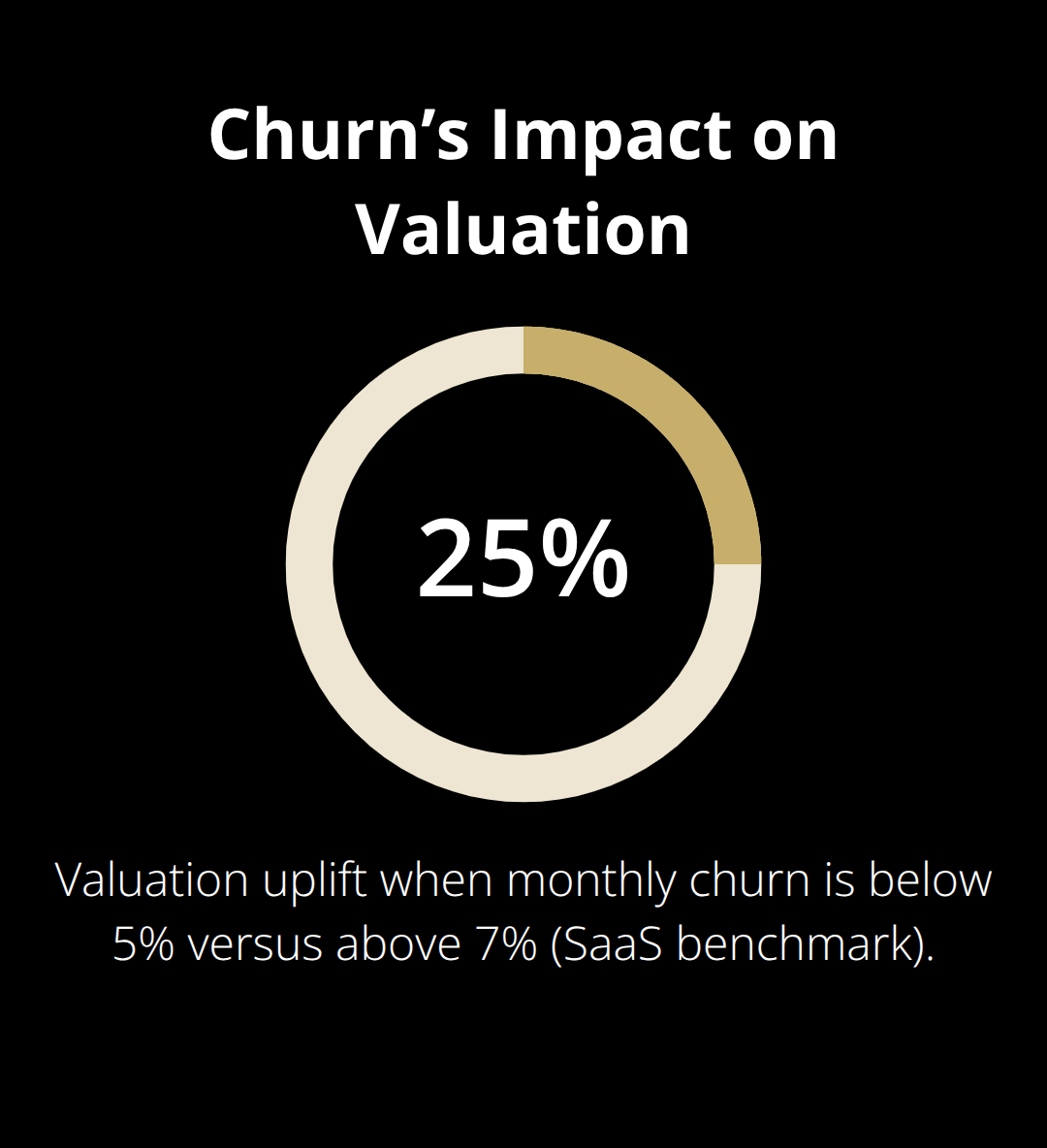
SaaS companies with monthly churn below 5% command valuations 25% higher than those above 7%. Even if you’re not SaaS, the principle holds: predictable retention matters enormously.
Operational Independence and Team Strength
Beyond the numbers, examine your operational systems. Can your business function if you disappear tomorrow? Most startups cannot. If you’re the only person who understands customer relationships, pricing decisions, or product development, buyers see a massive liability. Operational independence and founder dependency risks can lower your business value by 30-50%.
Identify the five to ten most critical functions in your business, then document who handles each one. If that person is you for most of them, start delegating immediately. Buyers want to see a management team that can execute without founder involvement. Hire or promote people into key roles: operations manager, sales lead, customer success owner, product manager. These roles don’t need to be permanent or full-time yet, but they need to exist and show competence.
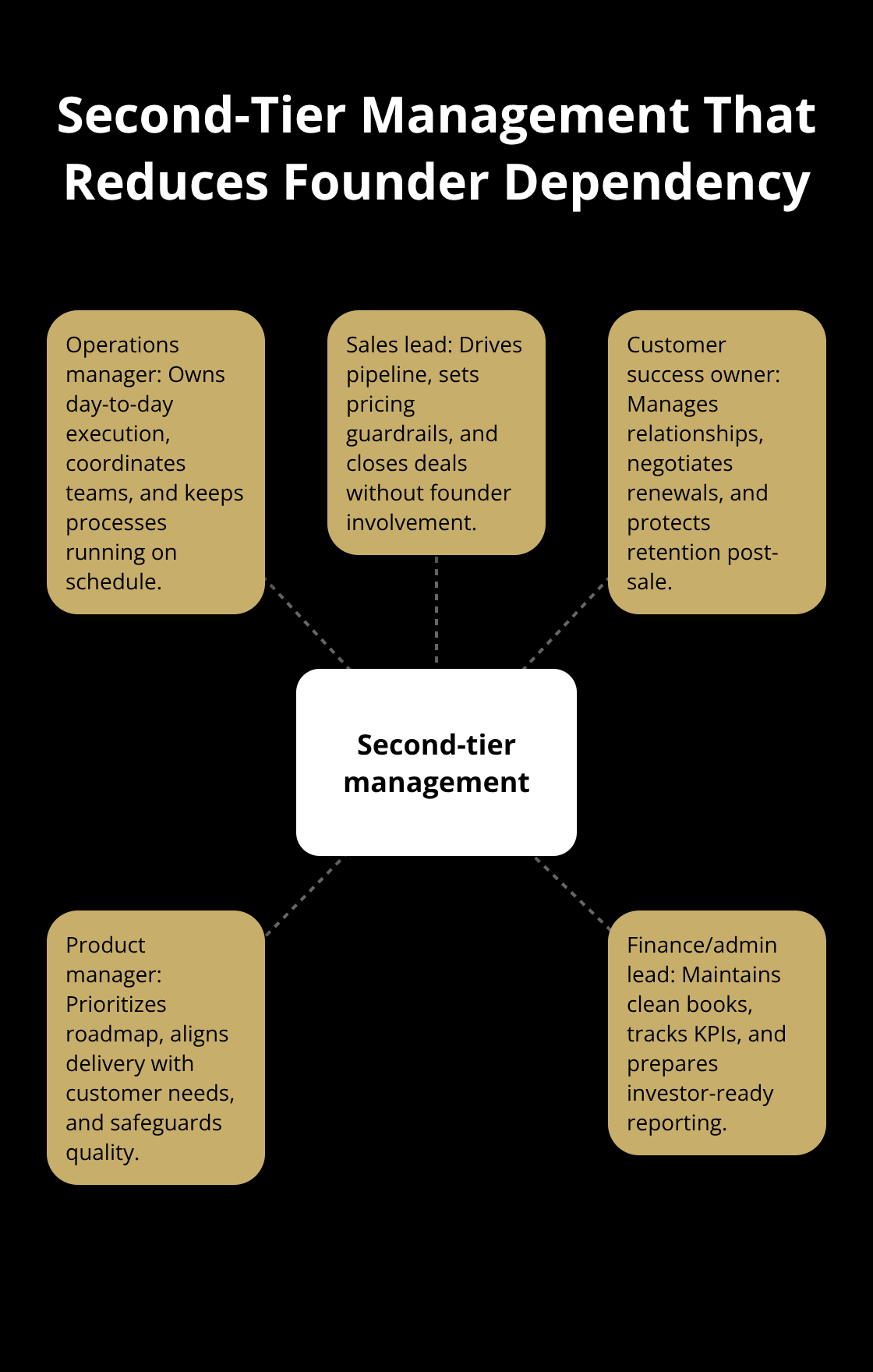
Document their responsibilities, decision-making authority, and performance metrics. Build documentation for every critical process: how you acquire customers, how you deliver your product or service, how you handle billing and support. This operational clarity transforms you from a founder-dependent business into a scalable asset.
Customer Concentration and Retention
Customer concentration matters enormously. If your top three customers represent more than 30% of revenue, buyers will demand price reductions or ask you to personally guarantee customer retention post-sale. Diversify your customer base before selling if possible, or at minimum, get long-term contracts from major customers that survive the ownership change.
These operational and financial foundations determine whether a buyer sees risk or opportunity in your business. The next step involves actively strengthening these areas before you enter the market.
Optimize Your Business Before Selling
Cutting costs and building operational independence aren’t luxuries-they’re prerequisites for attracting serious buyers and commanding premium valuations. Most founders wait too long to address these areas, leaving thousands or even hundreds of thousands of dollars on the table.
Strip Away the Inefficiencies
Examine your cost structure with brutal honesty. Which expenses directly generate revenue? Which ones exist because they’re convenient or because you’ve always done things that way? Consulting firm Bain & Company found that companies reducing operating costs by 10-15% typically see EBITDA multiples increase by 0.5-1.0x, translating to millions in additional sale value for mid-market businesses. This isn’t about penny-pinching-it’s about demonstrating to buyers that your profit margins are real and defensible.
Review your technology stack immediately. Most founders maintain three or four project management systems, two or three communication platforms, and redundant analytics tools. Consolidate ruthlessly. Renegotiate vendor contracts. When you approach suppliers and say you’re optimizing before a sale, many will offer 15-30% discounts rather than lose your business.
Audit your team’s utilization carefully. Identify roles that duplicate responsibilities or provide minimal contribution to revenue. You don’t need to fire people immediately, but map out which positions are truly essential and which exist for comfort or legacy reasons.
Build a Team That Functions Without You
This is where most founder exits fail. Buyers assess whether they’re purchasing a business or purchasing a job for themselves. If you’re the only person who closes deals, understands customer problems, or makes strategic decisions, that’s a job disguised as a business.
Promote or hire an operations manager who owns day-to-day execution. This person doesn’t need to be a superstar-they need to document processes, track KPIs, and ensure consistency. Simultaneously, identify your top salesperson or customer-facing person and make them the head of customer relationships. Give them authority to set pricing, negotiate contracts, and own retention.
Hire or promote someone into product development or service delivery who can own quality without your input. These roles should have clear responsibility frameworks, documented authority levels, and measurable performance targets. Businesses with strong second-tier management command valuations 20-30% higher than founder-dependent operations.
Document everything your team does in written procedures. This sounds tedious, but it’s non-negotiable. Buyers will ask to interview your team and review your processes. They’ll want to see that operations run smoothly because of systems, not because of individual heroics. Start running your business as if you’re leaving next month. Take a week off completely and see what breaks. That’s your gap list.
Deepen Customer Loyalty Before Transition
Customer retention after acquisition represents one of the biggest risks buyers worry about. If your customers stay only because they like you personally, that’s a massive problem.
Implement formal customer success metrics immediately. Track net retention rate, expansion revenue from existing customers, and customer satisfaction scores monthly. If you’re at 90% net retention, highlight that number constantly. If you’re below 85%, fix it before selling.
Implement long-term contracts wherever possible. If your average customer commitment is month-to-month, move toward annual or multi-year agreements. Offer discounts for longer commitments-the reduced churn risk is worth far more than the discount you give.
Create a customer advisory board of your five to ten most important accounts. Meet quarterly and show them your product roadmap. This formalizes relationships and signals to buyers that your customers have genuine strategic interest in your success.
Invest in customer education and self-service resources. The more your customers solve problems independently, the less they depend on your personal involvement. Build video tutorials, knowledge bases, and community forums. Buyers see this as evidence that your customer relationships are durable and scalable, not fragile and founder-dependent. These operational and financial improvements position your business as an attractive acquisition target. The next step involves preparing for the actual sales process itself.
Prepare Your Business for Serious Buyers
Organize Legal Documents and Compliance Records
Your legal and financial foundation determines whether buyers move forward or walk away. Organize legal documents and compliance records before you even start marketing your business. Pull together all contracts: customer agreements, vendor contracts, employment agreements, intellectual property assignments, and licensing deals. Buyers will request these documents, and gaps or inconsistencies hand them negotiating leverage they’ll use against you.
If you’ve never formalized IP ownership from contractors or early employees, fix this immediately. Courts have invalidated entire acquisitions because IP rights weren’t properly assigned. Organize your compliance records next. If you operate in regulated industries, gather proof that you meet all requirements. Document any past violations or fines and show how you resolved them. Buyers conduct extensive due diligence, and surprises here can kill deals or trigger massive price reductions.
Create a data room using Google Drive, Dropbox, or dedicated platforms where buyers can access documents securely during negotiations. This signals professionalism and speeds up the due diligence process considerably.
Calculate Your Valuation Accurately
Valuation represents where most founders go wrong. They either overestimate based on revenue alone or accept the first offer without understanding market comparables. Research your industry’s valuation multiples using sources like SBA data or industry reports specific to your sector. Calculate your valuation accurately using EBITDA multiples alongside other approaches like revenue multiples and discounted cash flow analysis. Buyers will use the lowest number they can justify, so knowing your floor and ceiling protects you during negotiations.
Structure Your Deal Terms
Determine your deal structure early. Do you want an all-cash deal, or can you accept a mix of cash, seller financing, and earnouts? Earnouts tie a portion of your sale price to hitting performance targets after the sale. These sound attractive but create misaligned incentives and often leave founders disappointed when buyers claim targets weren’t met.
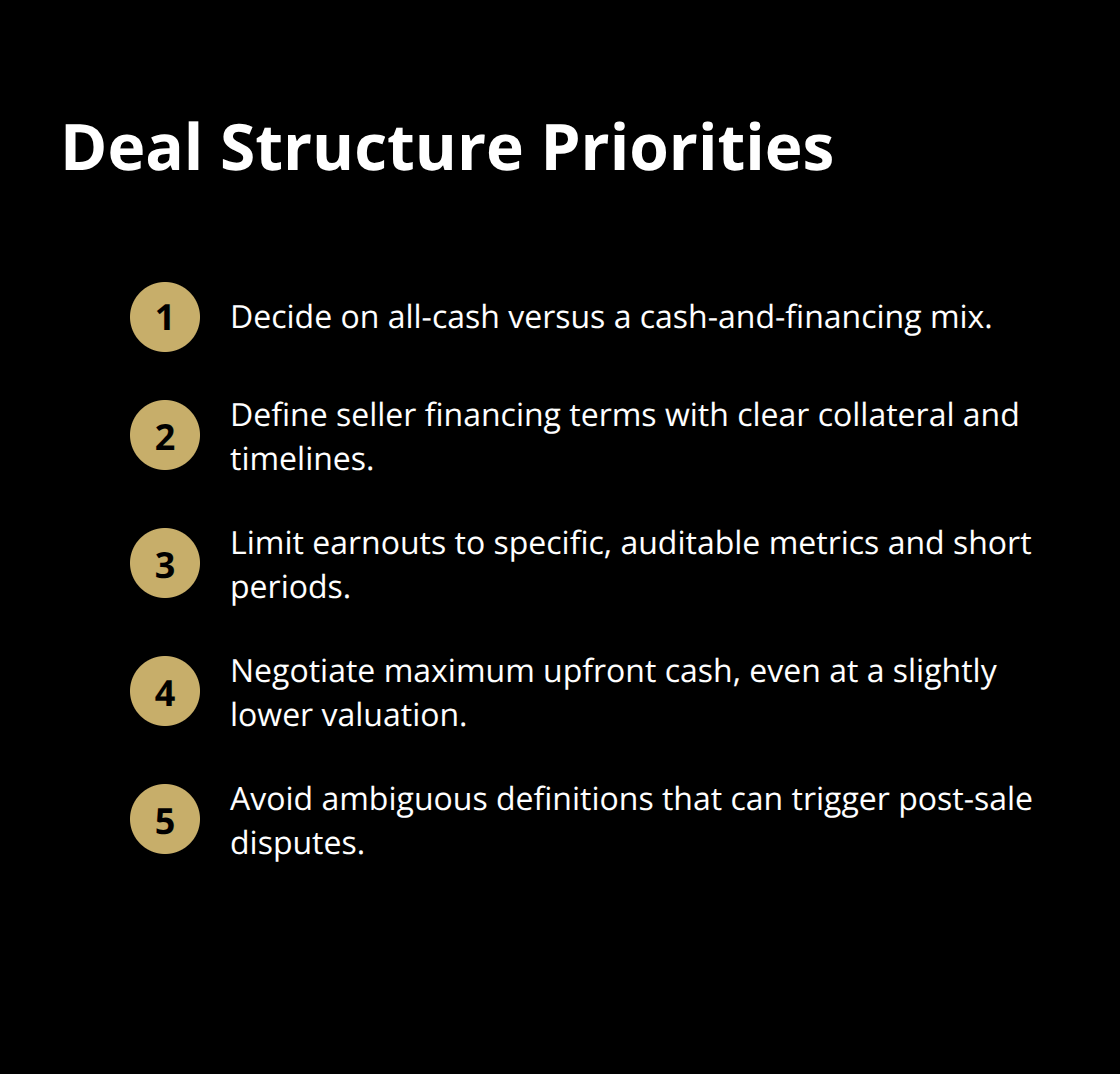
Negotiate for maximum upfront cash, even if it means accepting a lower overall valuation. This approach protects you from post-sale disputes and gives you certainty on day one.
Identify and Target Potential Buyers
Develop a buyer attraction strategy before you formally list. Identify and target potential acquirers in your space, including direct competitors, adjacent market players, and private equity firms. Research their acquisition history and growth priorities. When you formally market your business through syndication partners, targeted outreach to these specific buyers dramatically increases serious offers.
Most founders wait until they’re in formal sale mode to think about marketing. That’s backward. Start positioning your business as acquisition-ready months before you list.
Final Thoughts
You’ve now walked through the complete exit planning steps needed to transform your startup into a sale-ready asset. The path from promising idea to attractive acquisition target requires discipline across three critical areas: assessing your financial and operational foundation, actively strengthening your business before market entry, and preparing the legal and strategic groundwork for serious buyers. The founders who exit successfully don’t rush this process-they spend months building operational independence, cleaning up financial records, and diversifying customer relationships.
Your immediate priorities are clear. Pull together three years of audited or reviewed financial statements and organize them into a single, clean package. Identify the five to ten most critical business functions and ensure someone other than you owns each one. Get long-term contracts from your largest customers, strip away inefficient costs, and document every operational process (these steps alone position you miles ahead of most founders entering the market).
The exit planning steps you’ve learned here represent what serious buyers actually evaluate. They care whether your business generates predictable revenue, runs without founder involvement, and retains customers after ownership changes. Professional guidance accelerates this entire process significantly-at Unbroker, we combine expert advisors with AI-driven buyer matching and national marketing to help founders like you navigate exit planning efficiently. Our Full Service Business Sale charges a 6% success fee paid only when your business sells, with no hidden costs, and we handle confidential marketing, legal document preparation, buyer matching, and negotiation support so you can focus on running your business. Learn more about how we can support your exit at Unbroker.